
True legacy isn’t measured by what you write on a check. It’s measured by the systemic impact of where those dollars come from.
When most successful families think about philanthropy, they view it as a personal or emotional line item. They write check after check to causes they care about out of their personal accounts. They treat charitable giving as a separate decision from their business operations, tax structures, and portfolio design. But treating philanthropy as a standalone transaction is a major misstep. A sophisticated wealth strategy looks at a charitable goal and asks a far better question: How can we route this intent through our financial architecture to maximize efficiency for both the family and the cause?
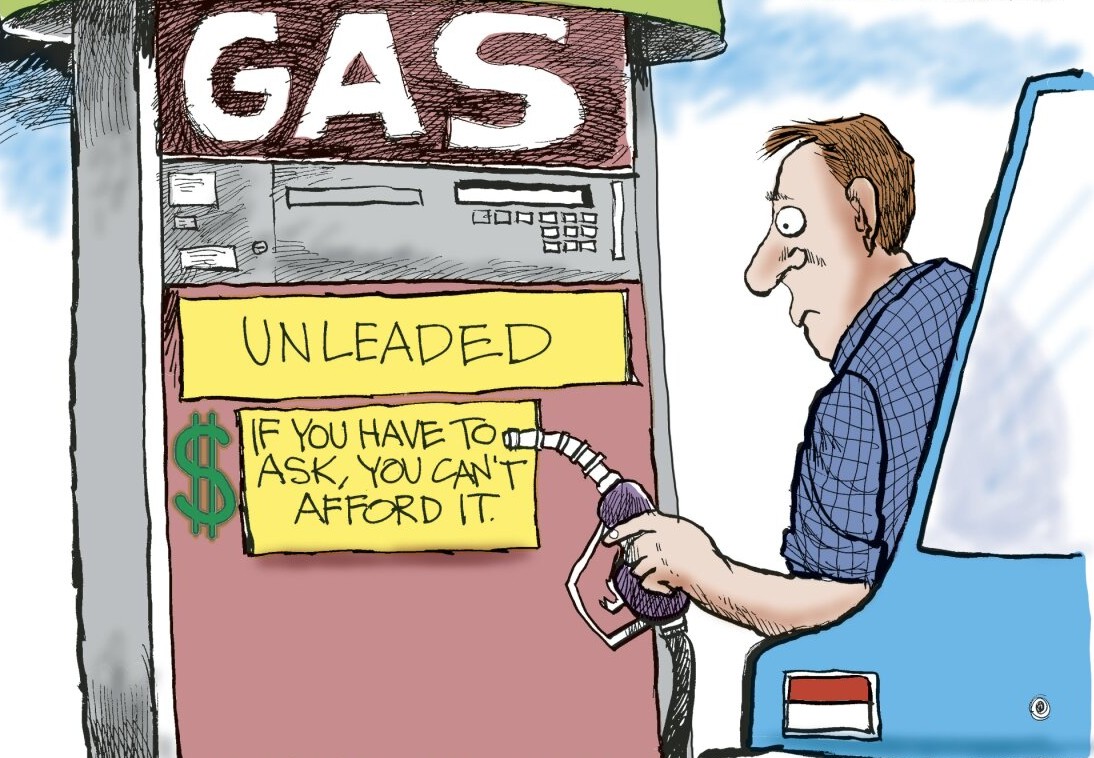
The Checkbook Mistake: Giving Away After-Tax Value
The standard online advice tells you to give generously to lower your tax bill. But writing a personal check from a traditional bank account is often the least efficient way to give.
When you write a check, you are donating dollars that have already been subjected to income tax. You then have to jump through standard deduction hoops at tax time just to try and claw some of that value back.
Strategic charitable planning completely flips this framework. Instead of giving away liquid cash that has already been taxed, high-net-worth families give away asset appreciation or route distributions straight from pre-tax structures. By changing where the dollars come from, you eliminate taxes on multiple fronts before the charity even touches the funds.
Engineering Philanthropy into Your Financial System
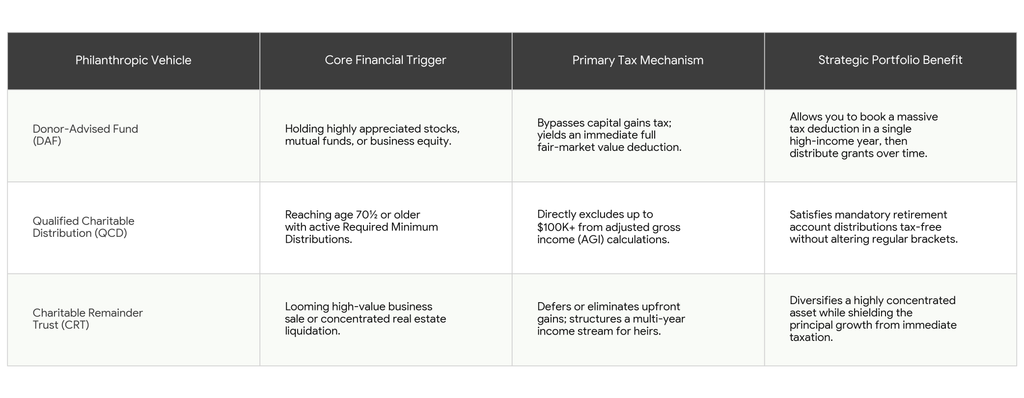
True charitable planning integrates your intent directly into your broader tax and business strategies. When properly designed, a single philanthropic decision can solve multiple portfolio problems simultaneously:
- Bypassing the Capital Gains Trap: If you hold highly appreciated stock or real estate, selling the asset triggers a massive capital gains tax bill. By donating the asset directly to a Donor-Advised Fund (DAF) or charitable trust, you bypass the capital gains tax entirely, claim a full fair-market deduction, and allow the full un-redacted balance to fund your mission.
- The RMD Counterstrategy: For retirees facing Required Minimum Distributions (RMDs), forced account payouts can spike your taxable income and push you into a higher bracket. Executing a Qualified Charitable Distribution (QCD) routes those funds directly from your retirement account to a qualified nonprofit, satisfying your legal distribution requirement without adding a single dollar to your adjusted gross income.
- Business Transition Architecture: Business owners approaching a liquidity event or succession transition can use charitable vehicles to offset massive, spike-year tax liabilities. Modeling the donation before the business sale anchors your equity and shields corporate gains from unnecessary taxation.
Final Thoughts
Philanthropy should never be an afterthought or a reactive transaction executed on December 31st. It is an active, interconnected component of a modern financial strategy.
When you align your charitable intent with sophisticated tax modeling, you aren’t just giving money away. You are intentionally choosing where your capital goes, keeping more control over your wealth, and building an enduring family legacy that extends far beyond a balance sheet.
iPlan. Do you?