Relief Rallies, Late‑Cycle Signals, and Rising Household Strain
April 2026 delivered one of the strongest equity market rallies in recent years, but it did so against a backdrop that remains structurally fragile. Markets surged, volatility fell, and investor confidence rebounded sharply. At the same time, geopolitical risk, monetary policy uncertainty, and growing stress on household balance sheets reinforced that the U.S. economy is firmly in a late‑cycle phase.
Market Performance: A Powerful Rebound
U.S. equities posted exceptional gains in April. The S&P 500 rose just over 10% for the month, the Nasdaq climbed more than 15%, and the Dow Jones Industrial Average advanced over 7%, with major indices finishing at or near record highs. This marked the strongest monthly performance for broad equities since 2020 and reflected a sharp reversal from the risk‑off sentiment seen earlier in the year. [investopedia.com], [cnbc.com] [get.ycharts.com]
Earnings season helped drive the rally, with many companies outperforming reduced expectations despite continued pressure from higher input costs and geopolitical uncertainty. At the index level, investor positioning shifted quickly back toward risk assets, fueled by stronger-than-feared corporate results and improved near-term sentiment.
Sector Performance: Leadership Was Narrow but Clear
April’s gains were not evenly distributed. Technology stocks led decisively, rising over 20% for the month, driven by semiconductor, AI, and large-cap platform companies. Continued investment in AI infrastructure and strong cloud growth reinforced the market’s preference for scalable, capital-efficient business models. [get.ycharts.com] Real Estate outperformed as longer-term rates stabilized, while Industrials benefited from strong earnings from global economic bellwethers and infrastructure-linked demand.
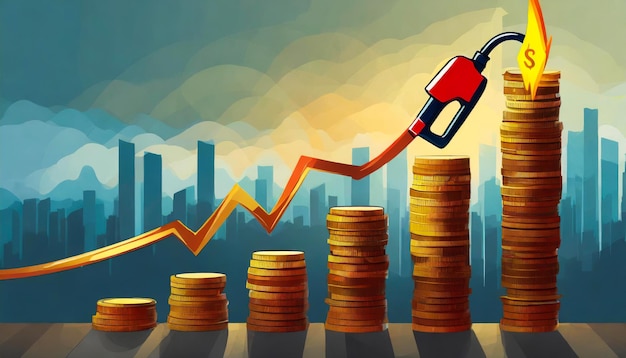
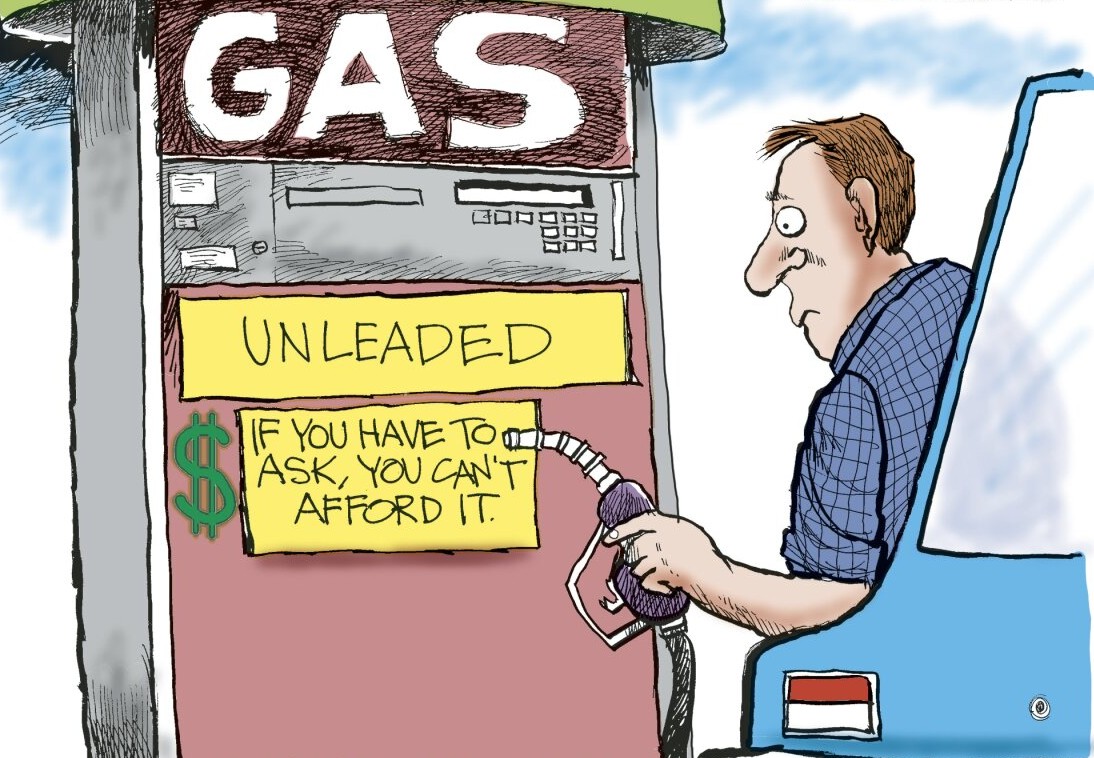
By contrast, Energy lagged broader equities, retracing part of its sharp March gains. However, that divergence is important: while market pricing stabilized, consumers have not experienced meaningful relief. Elevated fuel costs remain embedded in household budgets, contributing to ongoing financial pressure and reduced discretionary flexibility. Defensive sectors such as Consumer Staples and Utilities also underperformed, as investors rotated away from safety and back toward growth and cyclical exposure.
Geopolitics: Iran Conflict Continues to Shape Risk
The conflict involving Iran remained a key macro driver throughout April. The war, which began in late February, triggered one of the largest oil supply shocks in modern history, with disruptions tied to the Strait of Hormuz—responsible for a significant share of global energy flows. [cnbc.com], [energynow.com] While a temporary ceasefire and ongoing negotiations reduced immediate escalation fears, the situation remains unresolved. Companies across sectors have already reported rising transportation, raw material, and supply chain costs tied to the conflict, with reduced forward visibility becoming a consistent theme in earnings commentary. [straitstimes.com] Even without further escalation, the residual effects—higher costs, pricing pressure, and uncertainty—continue to filter through the economy.
Federal Reserve: End of an Era, Beginning of Uncertainty
April marked what is likely Jerome Powell’s final Federal Reserve meeting as Chair, with his term ending May 15, 2026. The Fed held rates steady, citing persistent inflation pressures and geopolitical uncertainty. [usnews.com] Powell confirmed he intends to remain on the Federal Reserve Board after stepping down as Chair, breaking from modern precedent and introducing added complexity during a leadership transition. [ijpr.org], [chase.com] His tenure—spanning pandemic response, aggressive rate hikes, and prolonged inflation pressures—has defined an unusually volatile economic era. The transition now comes at a time when inflation risks remain tied not only to domestic demand but also to global energy markets and geopolitical instability.
The Consumer: The Weak Link in the Cycle
While markets surged, the condition of the U.S. consumer deteriorated further beneath the surface. Household debt has climbed to approximately $18.8 trillion, with credit card balances exceeding $1.28 trillion. [newyorkfed.org] Credit card and student loan delinquencies have increased, particularly among lower-income households, while borrowing costs remain elevated due to high interest rates. Although mortgage delinquencies remain relatively stable overall, they are rising in more economically sensitive regions. [markets.fi…ontent.com] [newyorkfed.org] At the same time, consumer savings rates remain low and sentiment has weakened, reflecting growing concern about personal financial stability. This divergence—strong asset prices alongside strained household balance sheets—is a defining characteristic of late‑cycle conditions.
Regulatory Shift: FLASH WARNING of Reduced Reporting and Visibility
Late in the month, the SEC proposed a rule change allowing public companies to shift from quarterly reporting (Form 10‑Q) to semiannual reporting (Form 10‑S). [sec.gov] While positioned as a move toward greater flexibility and long-term focus, the shift could reduce transparency and delay the recognition of financial deterioration or accounting adjustments. Critics have already noted that less frequent reporting could increase the risk of weaker disclosure quality and reduced investor visibility, particularly for smaller and mid-cap companies. [news.bloom…erglaw.com] In a late‑cycle environment, this change comes at a time when timely information is most critical.
What This Means for Your Portfolio
April’s rally was powerful—but it does not eliminate underlying risk.
First, market concentration remains elevated. A narrow group of technology and AI-driven companies accounted for a large portion of the market’s gains. While these businesses remain fundamentally strong, portfolios that are overly dependent on a concentrated leadership group are more exposed to shifts in sentiment, valuation compression, or changes in capital spending trends.
Second, consumer deterioration is a forward-looking risk. Rising delinquencies and increased reliance on credit are not backward indicators—they are leading signals. As borrowing costs remain high and essentials like energy continue to pressure household budgets, discretionary demand becomes more vulnerable. This has direct implications for sectors tied to consumer spending.
Third, inflation remains embedded in real life, even if headline data moderates. Elevated fuel, insurance, and interest costs continue to impact cash flow at both the household and business level. This limits the Federal Reserve’s flexibility and increases the likelihood that policy remains restrictive longer than markets may currently expect.
Finally, transparency risk is increasing. The proposed shift toward semiannual reporting introduces a wider gap between verified financial checkpoints. Combined with late‑cycle earnings pressure, this increases the importance of focusing on underlying fundamentals—cash flow quality, balance sheet strength, and realistic earnings sustainability—rather than relying solely on reported earnings momentum.
The key takeaway is simple:
Markets can rally strongly late in the cycle—but the margin for error becomes smaller.
Positioning today should emphasize resilience over optimization—favoring diversification, quality assets, and disciplined risk management over chasing recent performance. The broader lesson is simple but often missed: Effective planning isn’t about chasing the markets. It’s about designing a system where taxes, growth, and cash flow are intentionally aligned—so capital behaves better long after the original event has passed. I know iPlan. Do you?